EXECUTIVE SUMMARY
- A Bain and Anahp study with nearly 14,000 private hospital patients points to waiting, communication and administrative friction as major drivers of dissatisfaction.
- Patient onboarding can become a continuous engagement experience, with short, contextual interactions across channels.
- Post-discharge follow-up can use contextual agents that detect signals and route patients to the right human team.
Brazilian healthcare enters 2027 with a clear opportunity to move beyond traditional satisfaction measurement and improve the moments that most influence the patient experience. The Bain and Anahp study with nearly 14,000 patients in private hospitals showed that waiting, communication and administrative friction are major drivers of dissatisfaction, while clear guidance and post-hospital follow-up can strongly improve the experience.
Onboarding as engagement
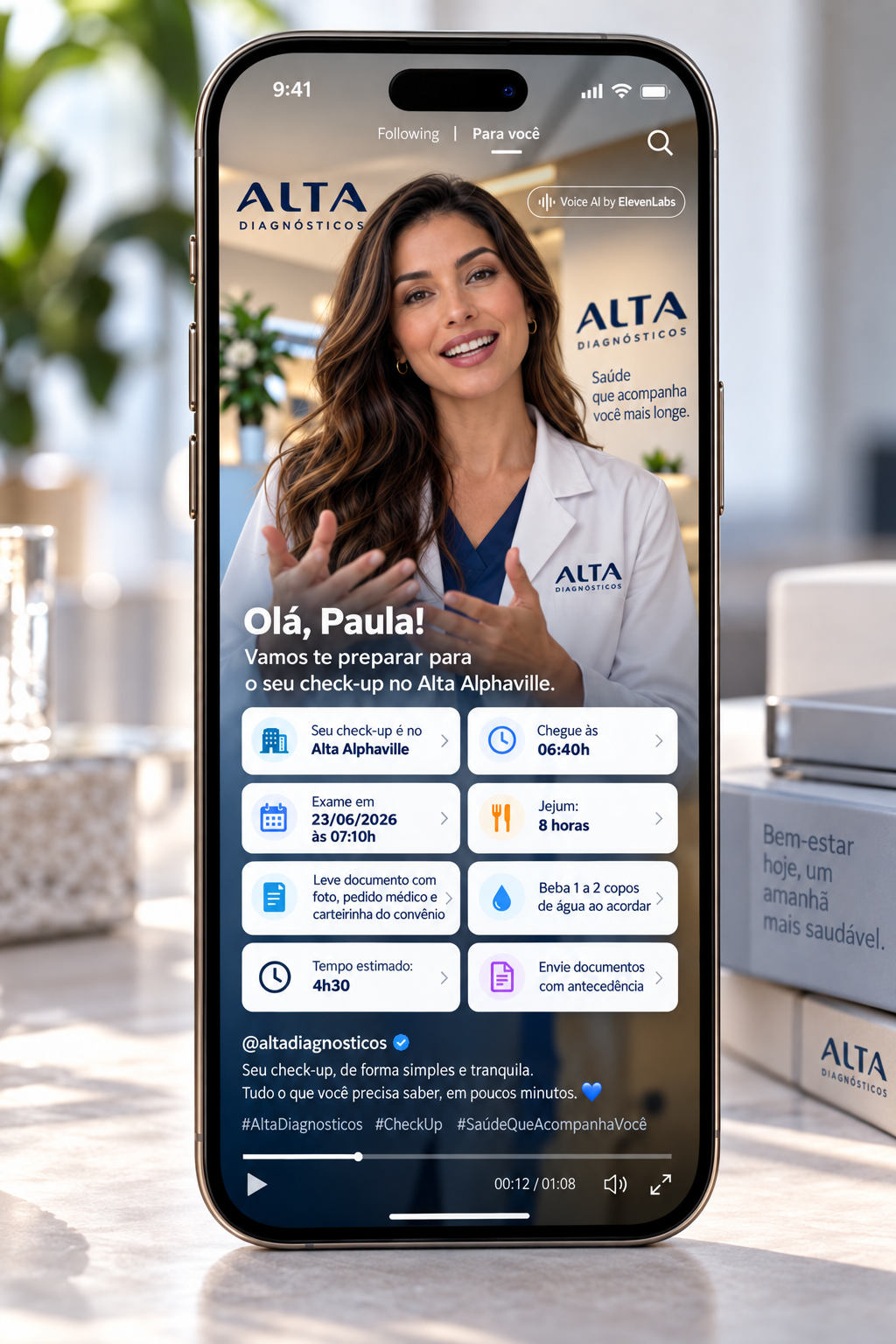
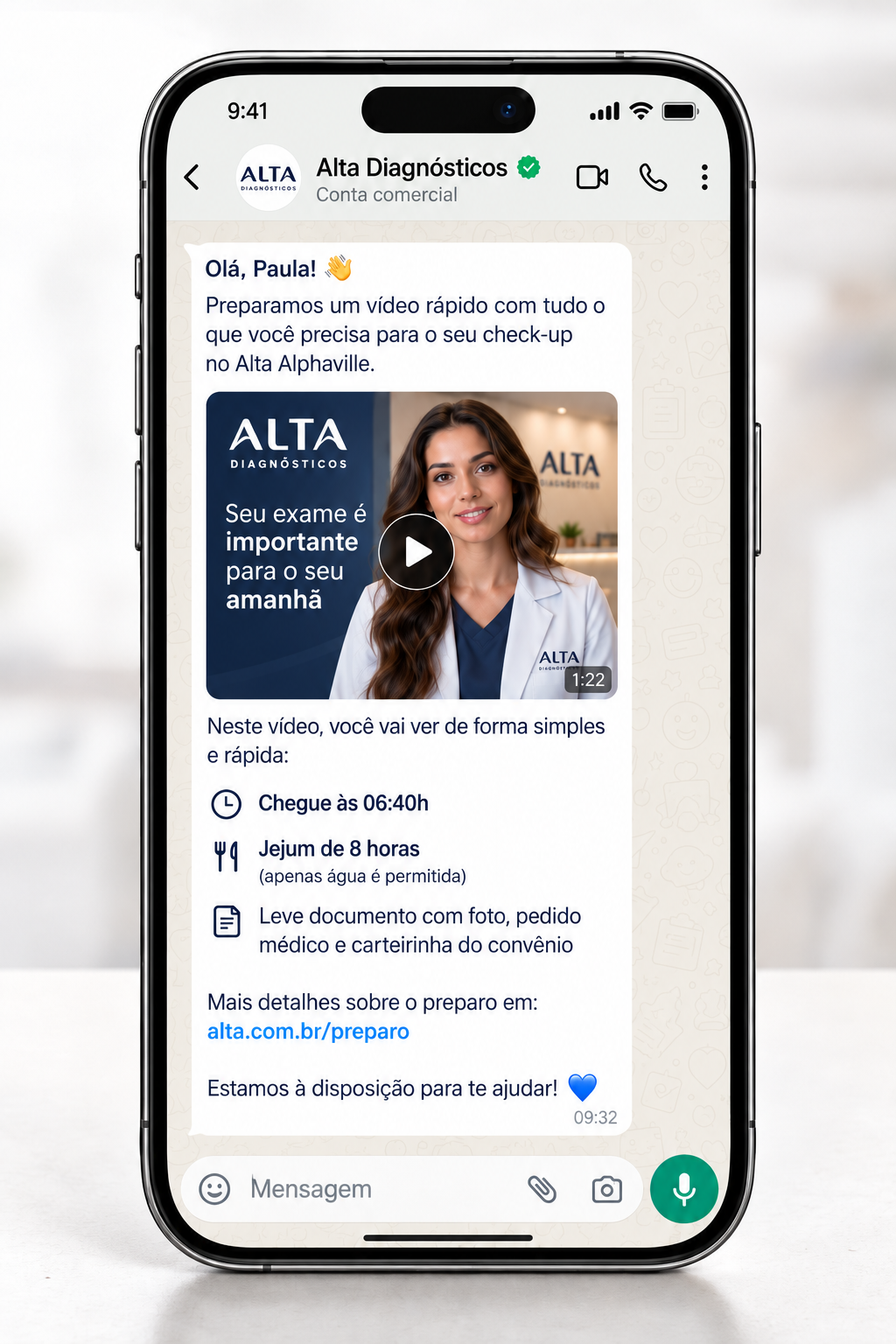
The first opportunity is to redesign patient onboarding as an engagement experience, not as a bureaucratic step. LISA can help healthcare organizations explain the care pathway through short videos, conversational content and continuous information delivered across multiple channels. Instead of giving patients a large amount of information at once, the experience can be broken into simple, contextual interactions that explain what will happen, how to prepare, what is expected from the patient and what the next step will be.
This approach can create a new model of patient education based on continuous information nurturing. A patient preparing for surgery, for example, could receive a short video about preparation, a message explaining admission procedures, a reminder about fasting and a final confirmation about what to bring. The objective is not only to inform, but to increase understanding, reduce anxiety and make it easier for the patient to engage with the care process.
GALLERY 1 / 2
Post-hospital follow-up
The second opportunity is to transform post-hospital follow-up through contextual conversational agents. The study highlights the importance of instructions and post-hospital monitoring in creating promoters. LISA can extend this experience by maintaining an intelligent conversation with the patient after discharge, understanding the context of the treatment and continuously looking for signals that may indicate difficulties, questions or potential complications.
Instead of a generic follow-up message, the patient could interact with an agent that knows the procedure performed, the expected recovery and the guidance provided at discharge. The agent could identify signals such as worsening symptoms, difficulty taking medication, uncertainty about instructions or failure to schedule follow-up care, and direct the patient to the appropriate human team when necessary.
SOURCES
- 01Bain & Company and Anahp · Bain & Company; Anahp
Get healthcare intelligence briefings
New technical analyses as they are published, no noise.
INSIGHTS
Get LISA's next analyses
New readings and each closed edition, sent as they are published.