
EXECUTIVE SUMMARY
- Nearly 9 in 10 adults struggle with everyday health information, according to the CDC
- The problem is not only that patients forget - it is that many never understood what was said in the visit
- The teach-back method confirms understanding: it tests how well you explained, not the patient
- Lisa's agents write in the patient's own language and confirm understanding, escalating to humans when something does not add up
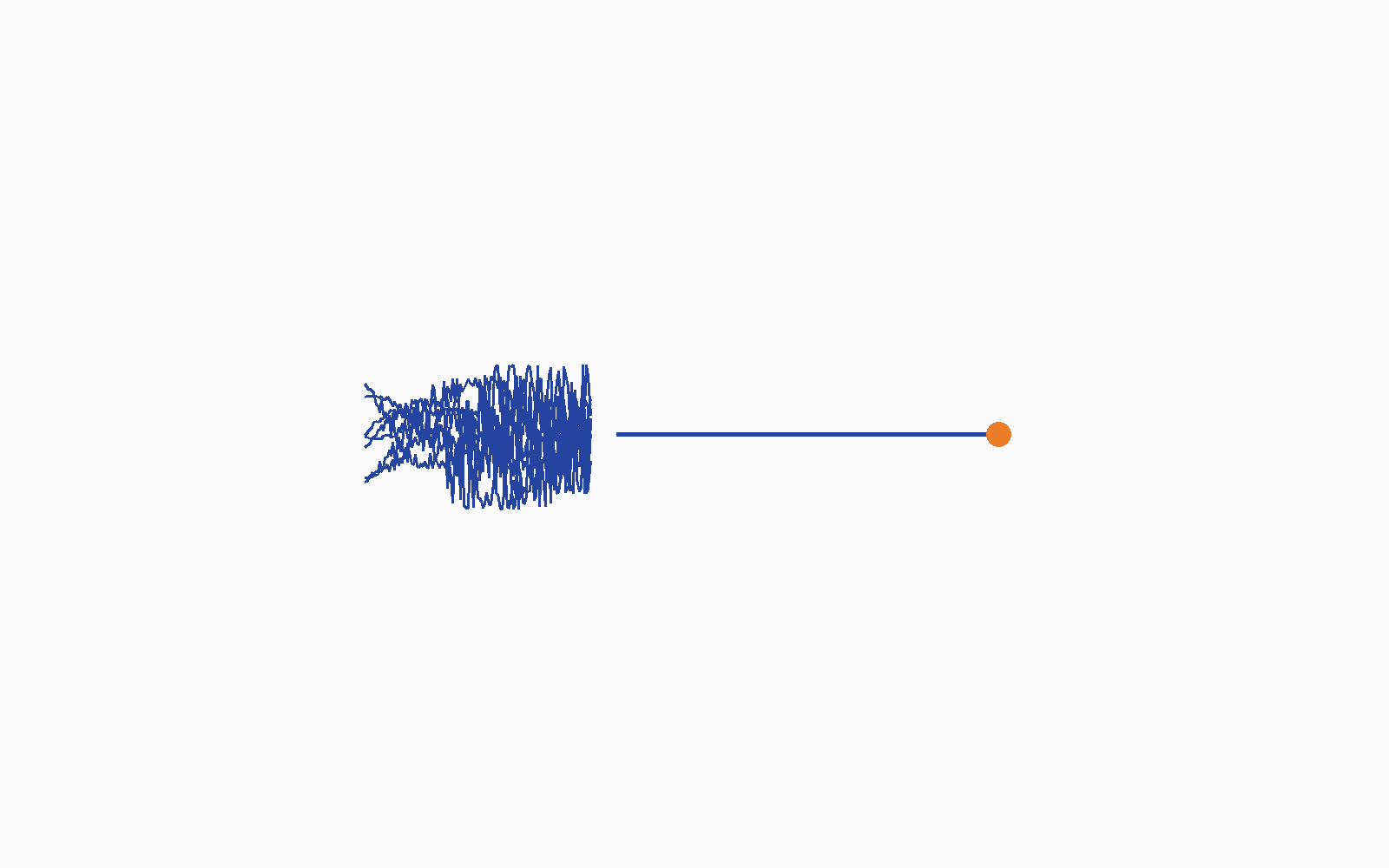
Healthcare has a problem that comes before memory. Before asking why the patient forgot the instructions, it is worth asking whether they understood them at all. The CDC estimates that nearly 9 in 10 adults struggle with everyday health information - reading a label, calculating a dose, following exam preparation. And it is not about schooling: anyone, stressed and sick in a consultation room, can walk out without having grasped the essentials.
The whole system, however, was designed as if comprehension were a given. Guidance leaves the visit in clinical jargon, compressed into the final minutes, handed to someone who has just received difficult news. Then the operation measures forgetting - and treats as a patient failure what was actually an explanation failure.
There is a simple, well-documented method for closing this gap: teach-back, from the US Agency for Healthcare Research and Quality (AHRQ). Instead of asking "any questions?" - whose answer is almost always no - you ask the person to explain, in their own words, what they need to do. The elegant detail is who the test applies to: if the explanation does not come back right, the explainer failed, and must explain again, differently.
That is where the architecture of Lisa's agents begins. Every message follows plain-language rules: short sentences, no abbreviations, one instruction at a time, with the reason attached to the order - because "eight hours of fasting" sticks better when it comes with the why. The agent does not measure how elegant the text is; it measures whether the right person can act on it.
And confirmation of understanding sits in the flow, not in hope. When the instruction is critical - a preparation, a medication, a warning sign - the agent asks for the patient's account in their own words. If the reply does not add up, the agent rephrases, repeats through another channel, or escalates to the human team. What never happens is a message going out as sent-and-forgotten.
This changes what a healthcare channel is held accountable for. A delivered message is not a care metric; an understood message is. The cost of confirming understanding is a few extra exchanges. The cost of not confirming is a redone exam, a wrongly taken medication, an unnecessary return - and a patient who learns not to trust the channel.
Caring means making care continue after the encounter. But no care continues on top of instructions that were never understood. At Lisa, the question is not "did the patient receive it?". It is "can they repeat, in their own words, what they need to do?". If they cannot, the work is not done.
METHOD
Editorial note: this article describes the design of Lisa's agents as implemented in the platform architecture, in which messages use plain language, confirm understanding with the patient and escalate to the human team whenever there is doubt.
SOURCES
- 01CDC - What Is Health Literacy? ("Nearly 9 out of 10 adults struggle with health literacy") · Centers for Disease Control and Prevention (CDC)
- 02Health Literacy Universal Precautions Toolkit - Use the Teach-Back Method (Tool 5) · Agency for Healthcare Research and Quality (AHRQ)
Get healthcare intelligence briefings
New technical analyses as they are published, no noise.
INSIGHTS
Get LISA's next analyses
New readings and each closed edition, sent as they are published.
HEALTH BRAZIL COMMUNITY
Join a curated community of healthcare leaders.
RELATED READINGS
Strategy
Treatment happens at home. Half of it never does.
The WHO measured it: half of chronic treatments are not followed in developed countries. The plan dies at home, between appointments. Lisa's agents stay with the patient in that interval, with consent and human escalation.
Nov 13, 2026 · 2 min read
Strategy
The regulatory clock is ticking. Who answers the patient on time?
Since July 2025, ANS Normative Resolution 623/2024 has imposed channels, hours and response deadlines on Brazilian health plan operators. Fast service is no longer a quality goal: it is compliance.
Nov 12, 2026 · 1 min read
Strategy
Care is not a disturbance: the consent behind every message
No message from Lisa's agents goes out without a care plan and without the patient's permission. The design behind proactive contact.
Nov 10, 2026 · 2 min read
Strategy
No patient should have to repeat their own story
Nov 09, 2026 · 2 min read