
EXECUTIVE SUMMARY
- Patients forget 40-80% of medical information immediately after the consultation (Kessels, 2003)
- Adherence to chronic disease treatment averages only 50% in developed countries (WHO, 2003)
- The post-consultation agent resends the essentials, confirms understanding, answers immediately and escalates to the human team
- The agent does not diagnose or change treatment: the boundary is protocol, not improvisation
In 2003, Roy Kessels published a review in the Journal of the Royal Society of Medicine that every care team should read once a year: patients forget 40% to 80% of the medical information they receive, immediately after the consultation. And almost half of what they do remember is incorrect.
This is not a character flaw in patients. It is the environment. A consultation is the worst possible learning setting: high anxiety, life-changing news, technical language, little time. The brain prioritizes coping with the emotion, not filing the instruction. The more important the appointment, the lower the retention.
The cost of the forgotten half shows up later, and no one books it as communication loss: the dose taken at the wrong hour, the exam preparation done halfway, the follow-up visit that never happens, the call to the clinic with a question that was already answered. The World Health Organization measures the final result: in developed countries, adherence to chronic disease treatment averages only 50%.
The traditional answers are the leaflet, the "call us if you have questions" and the patient portal. All share the same design flaw: they require the patient to know what they forgot. But whoever forgot does not know what they forgot.
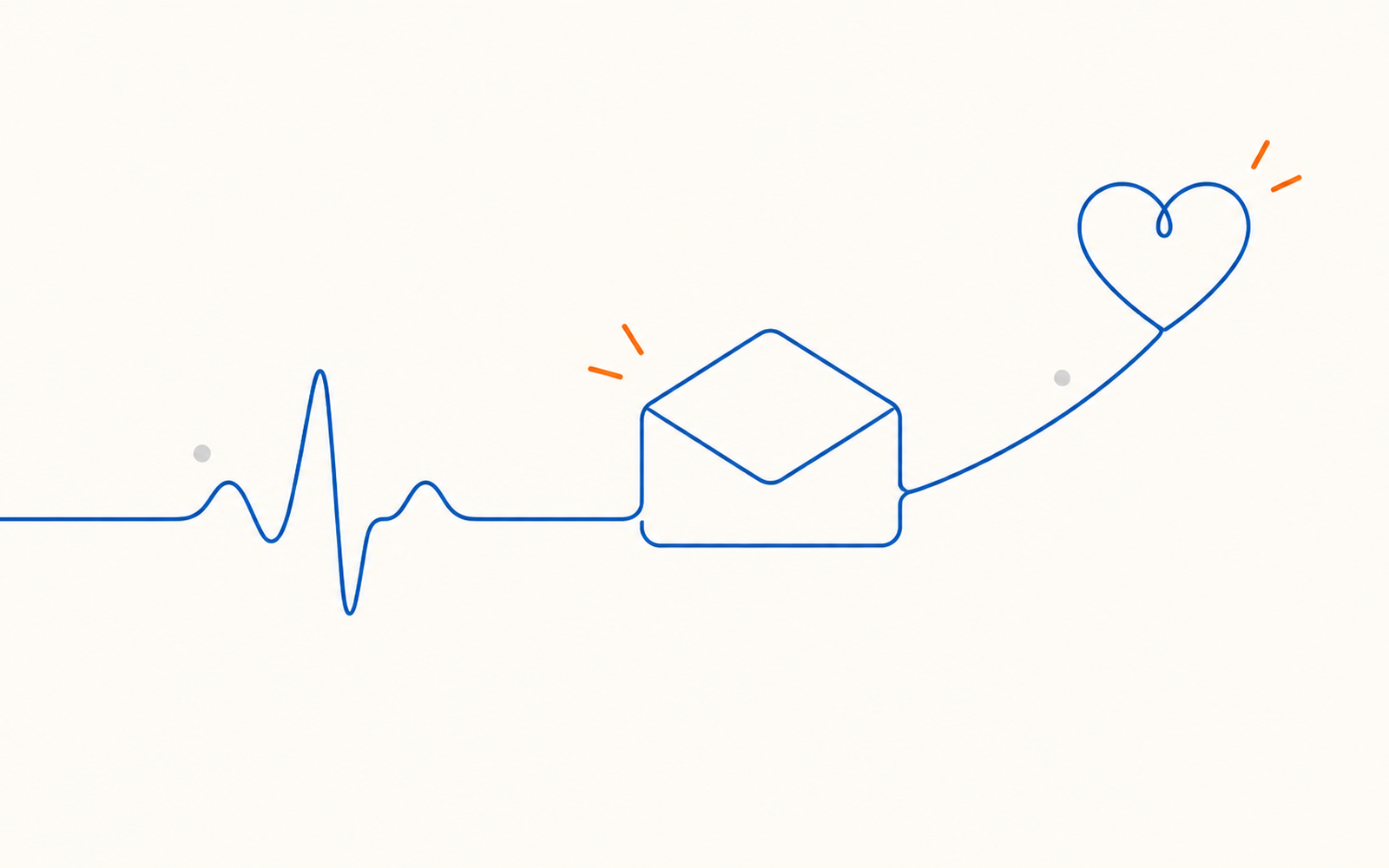
That forgotten half is what the anatomy of the post-consultation agent is built for. Four functions: resend the essentials of the consultation in plain language, at the time each instruction needs to happen; confirm understanding, not just delivery; answer everyday questions immediately, without queues and without judgment; and watch the conversation for signals, escalating to the human team when something moves off script.
The agent does not repeat the consultation. It makes sure the consultation survives the way out of the office.
The human remains at the center, by design, not by caution. The agent does not diagnose, change the course of treatment or interpret symptoms. It carries the guidance the physician already gave, checks whether it landed, and hands back to the team everything that requires a clinical decision. The boundary is protocol, not improvisation.
The consultation lasts thirty minutes. The treatment lasts months. A care journey cannot depend on what the patient managed to remember in the parking lot.
Sources
Get healthcare intelligence briefings
New technical analyses as they are published, no noise.
INSIGHTS
Get LISA's next analyses
New readings and each closed edition, sent as they are published.
HEALTH BRAZIL COMMUNITY
Join a curated community of healthcare leaders.
RELATED READINGS
Strategy
Treatment happens at home. Half of it never does.
The WHO measured it: half of chronic treatments are not followed in developed countries. The plan dies at home, between appointments. Lisa's agents stay with the patient in that interval, with consent and human escalation.
Nov 13, 2026 · 2 min read
Strategy
The regulatory clock is ticking. Who answers the patient on time?
Since July 2025, ANS Normative Resolution 623/2024 has imposed channels, hours and response deadlines on Brazilian health plan operators. Fast service is no longer a quality goal: it is compliance.
Nov 12, 2026 · 1 min read
Strategy
The patient didn't forget. They never understood.
Before memory comes comprehension: nearly 9 in 10 adults struggle with health information. That is where the design of Lisa's agents begins.
Nov 11, 2026 · 2 min read
Strategy
Care is not a disturbance: the consent behind every message
No message from Lisa's agents goes out without a care plan and without the patient's permission. The design behind proactive contact.
Nov 10, 2026 · 2 min read