
EXECUTIVE SUMMARY
- The most sensitive moment in care is the baton pass between agent and human team
- WHO treats communication during patient hand-overs as a patient-safety risk
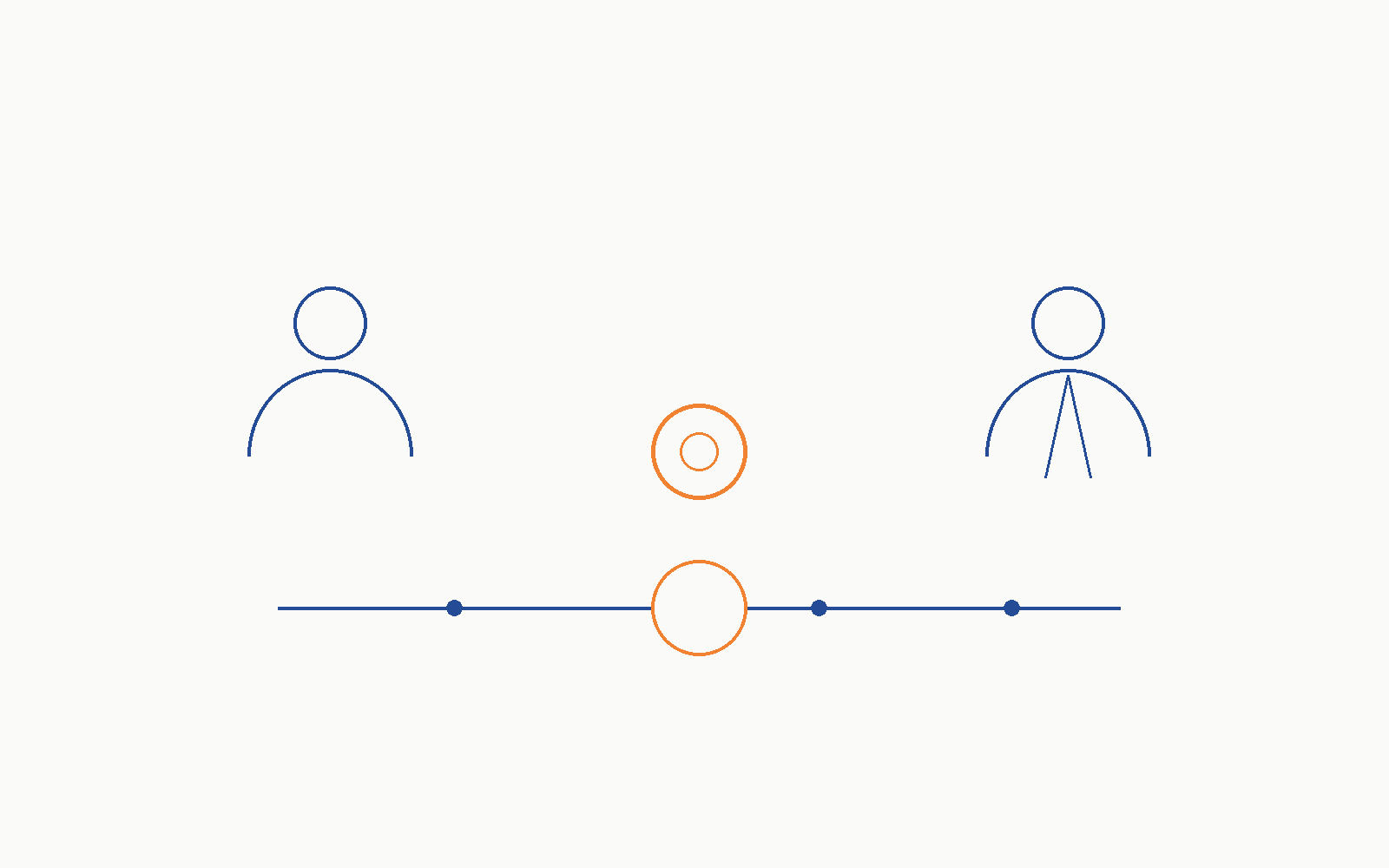
- In Lisa's design, the handoff carries a structured summary: who the patient is, what happened, why it escalated
- The patient never repeats the story; the team starts already knowing
Everyone who has used a healthcare service knows the ritual: you explain everything to the bot, the bot transfers you, and the human agent's first question is "how can I help you?" The story you just told died in the transfer.
In healthcare, this failure has a technical name. The World Health Organization dedicates one of its Patient Safety Solutions precisely to communication during patient hand-overs, because it is at that baton pass - between professionals and systems - that information is lost and error is born. WHO's guidance is direct: hand-overs require standardized communication, with the essentials of the case recorded and transmitted, not remembered.
That is why, in the architecture of Lisa's agents, escalation is not a "talk to a human" button. When the agent detects that a case has moved off its script - a clinical question, an unexpected symptom, an explicit request for the team - it does not transfer a patient. It transfers a case.
In practice, the handoff from Lisa's agents carries a structured summary: who the patient is in their journey, what has been said and sent, what they asked, why the agent decided to escalate, and what has been done so far. The human team does not receive a queue of strangers; it receives each person with their own story organized, and starts the conversation where it stopped.
This changes the experience on both sides. The patient does not have to repeat symptoms, dates and instructions at every change of hands - repeating your own story is tiring for anyone, and it is draining in a particular way for someone who is ill, anxious or recovering. And the team does not spend the first minutes reconstructing the case: it spends them solving it.
One design detail matters: the handoff summary is not a raw conversation log. It is a synthesis of what the team needs in order to act - the same criterion WHO recommends for hand-overs between professionals. Too much information hides the essential; too little forces repetition. The agent's job, at that moment, is to curate what matters.
The measure of good service is not a machine that never needs help. It is that, on the day it does, the patient does not feel sent back to the start of the queue. At Lisa, the human enters the conversation already knowing - and the patient tells the story only once.
METHOD
Editorial note: this article describes the design of Lisa's agents as implemented in the platform architecture, in which every escalation to the human team carries the structured context of the conversation.
SOURCES
- 01Communication During Patient Hand-Overs (Patient Safety Solutions, vol. 1, solution 3, 2007) · World Health Organization (WHO)
Get healthcare intelligence briefings
New technical analyses as they are published, no noise.
INSIGHTS
Get LISA's next analyses
New readings and each closed edition, sent as they are published.
HEALTH BRAZIL COMMUNITY
Join a curated community of healthcare leaders.
RELATED READINGS
Strategy
Treatment happens at home. Half of it never does.
The WHO measured it: half of chronic treatments are not followed in developed countries. The plan dies at home, between appointments. Lisa's agents stay with the patient in that interval, with consent and human escalation.
Nov 13, 2026 · 2 min read
Strategy
The regulatory clock is ticking. Who answers the patient on time?
Since July 2025, ANS Normative Resolution 623/2024 has imposed channels, hours and response deadlines on Brazilian health plan operators. Fast service is no longer a quality goal: it is compliance.
Nov 12, 2026 · 1 min read
Strategy
The patient didn't forget. They never understood.
Before memory comes comprehension: nearly 9 in 10 adults struggle with health information. That is where the design of Lisa's agents begins.
Nov 11, 2026 · 2 min read
Strategy
Care is not a disturbance: the consent behind every message
No message from Lisa's agents goes out without a care plan and without the patient's permission. The design behind proactive contact.
Nov 10, 2026 · 2 min read