
From waiting to continuous care: how LISA Agents support diagnostic, recovery and treatment journeys
A multimodal orchestration architecture designed to reduce avoidable waiting, turn post-care into genuine follow-up, and keep human support always available.
BY Lisa Intelligence · PUBLISHED October 01, 2026 · 8 min read
UPDATED October 01, 2026
EXECUTIVE SUMMARY
- In the Bain & Company + Anahp study of 13,984 patients across 18 Brazilian private hospitals, waiting emerged as the leading driver of detractor experiences, while clear guidance and post-hospital follow-up showed strong promoter potential.
- LISA is designed to reduce avoidable waiting and make unavoidable waiting understandable through context, next steps and proactive communication.
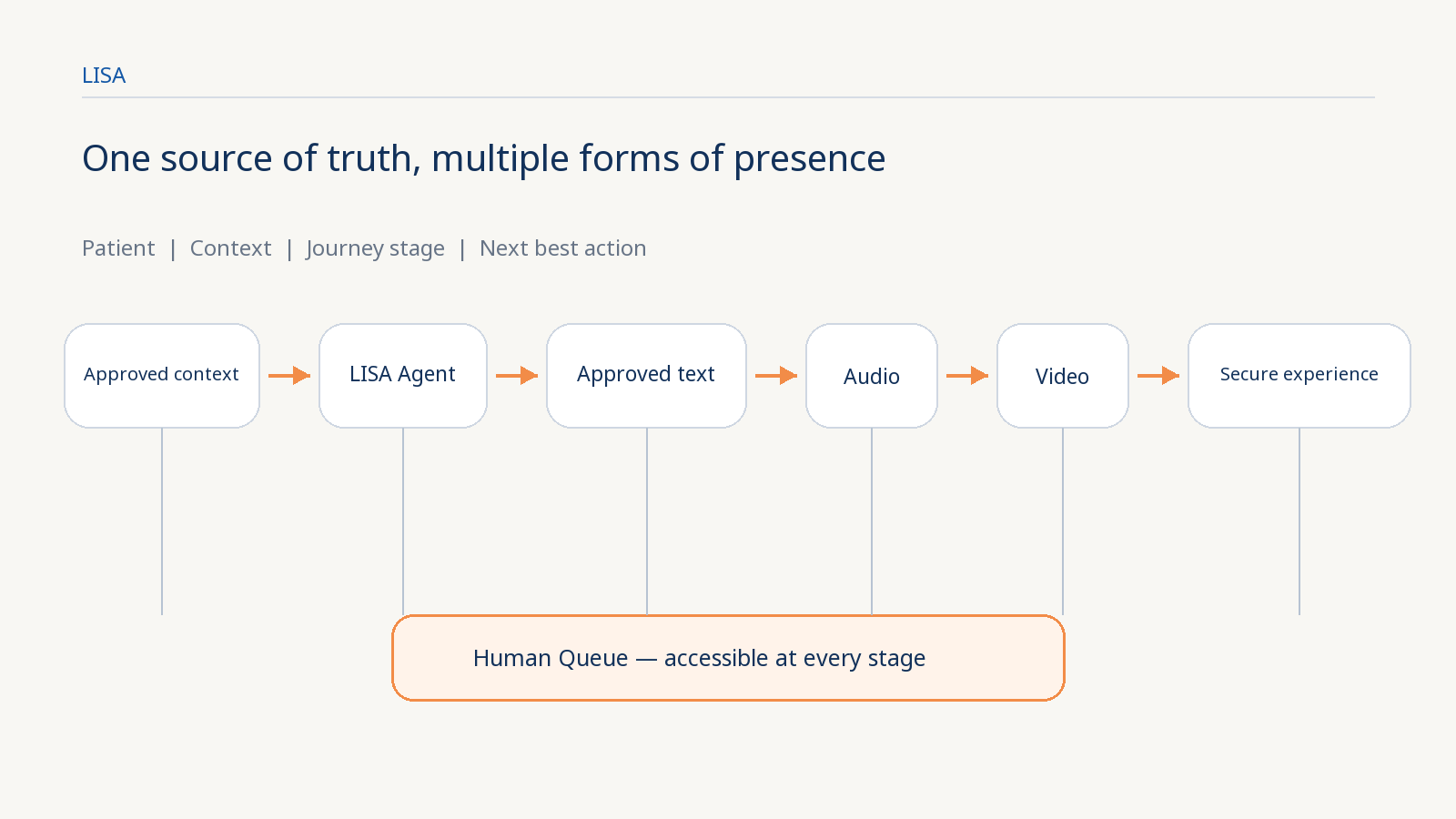
- Diagnostic, recovery and treatment share one orchestration pattern: approved context → agent → text → audio → video → next action.
- Human support never disappears: when uncertainty, exceptions or judgment are required, LISA routes the case to a human queue.
The problem is not only communication. It is continuity.
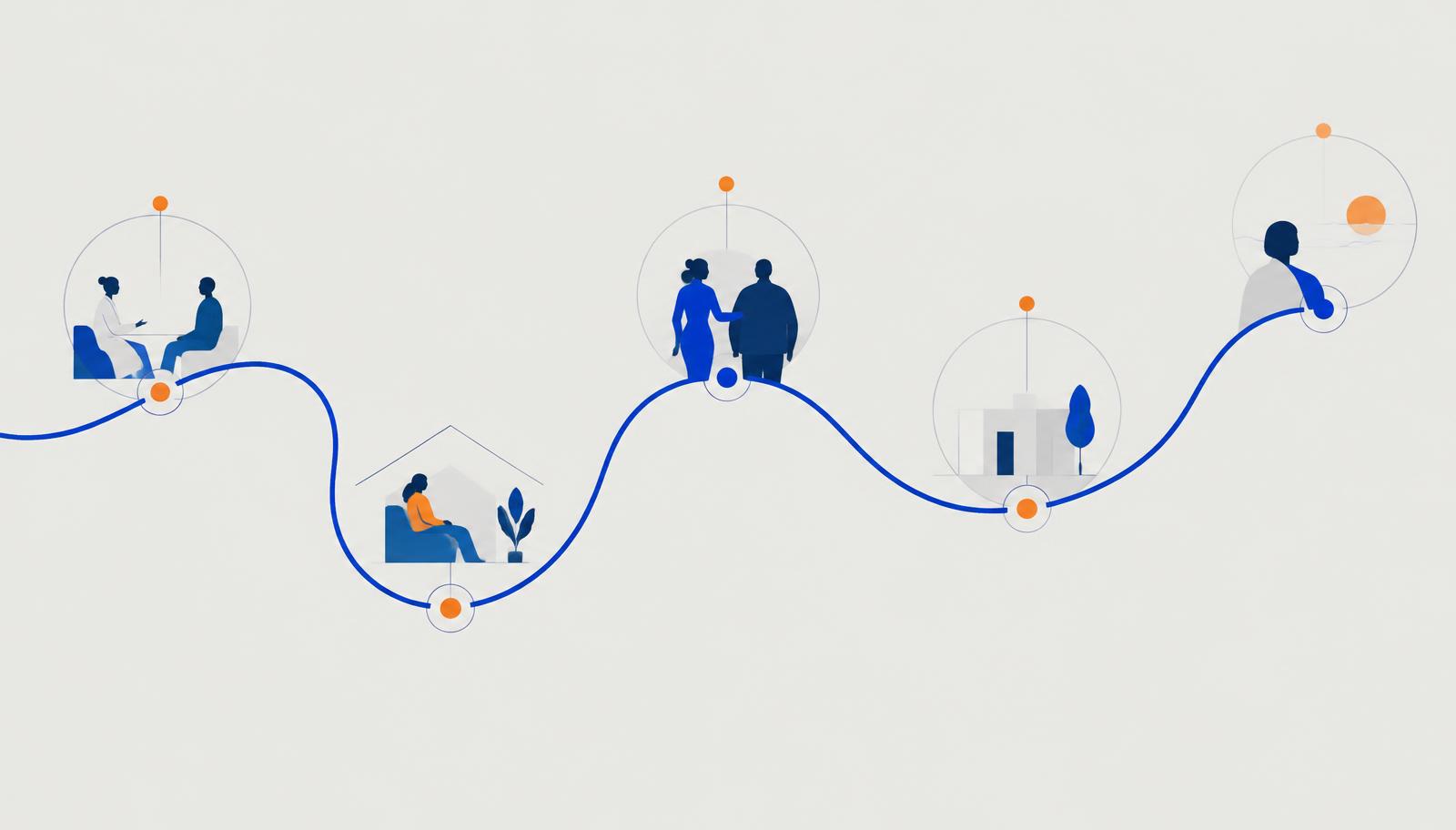
An appointment ends. An exam is scheduled. A discharge happens. A treatment begins. To a healthcare organization's systems, these events may live in different modules. To the patient, there is only one journey. It is precisely between one moment of care and the next that unexplained waits, uncertainty, preparation failures, lost context and the feeling of being left alone can emerge.
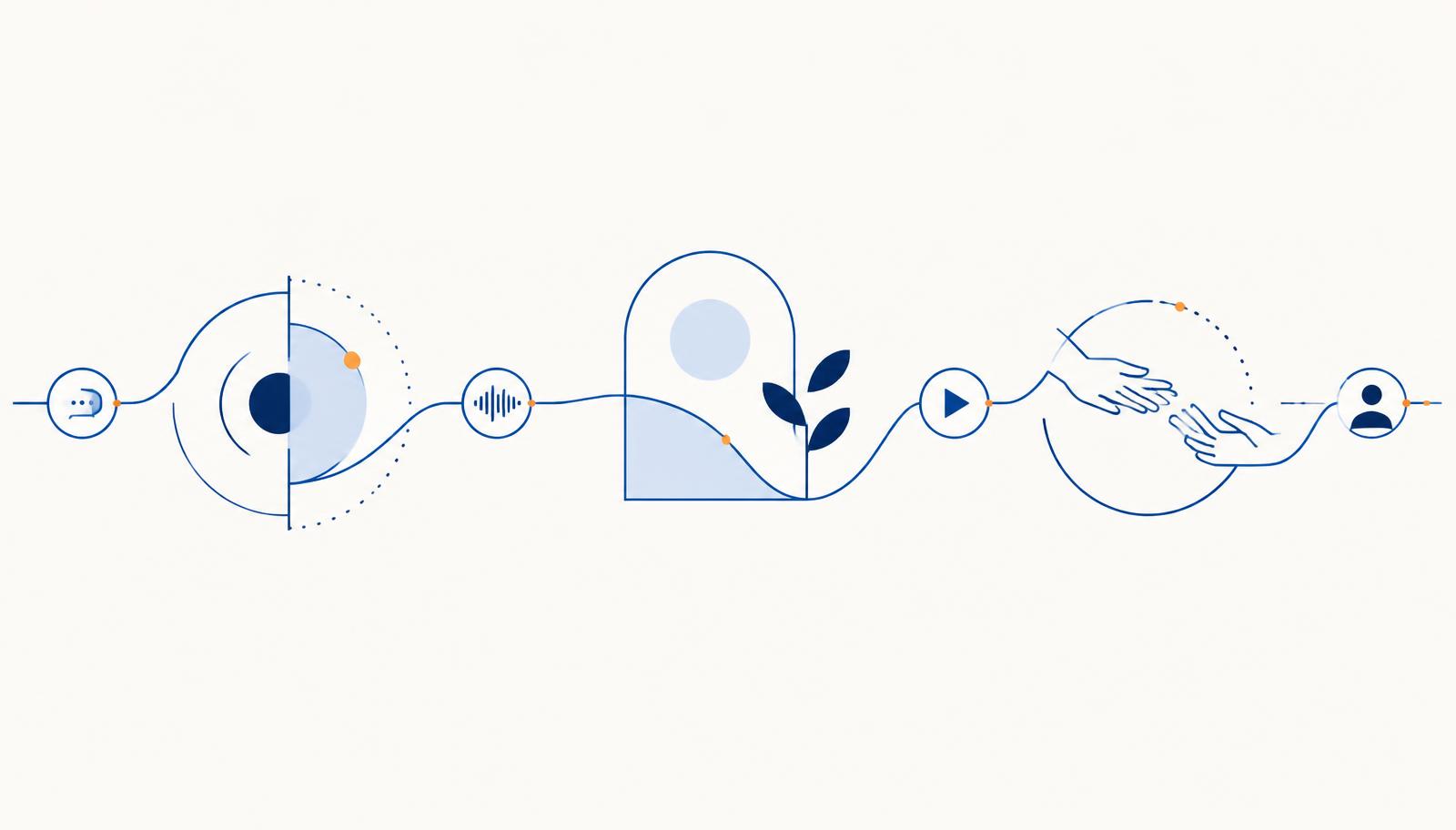
LISA is being built to operate in that space. Not as another messaging channel, but as a patient journey orchestration layer: an architecture that recognizes context, journey stage, institutional rules and the next permitted action, then decides when a simple message is enough, when voice or video can add clarity and presence, and when a person should take over.
No patient should feel alone between one moment of care and the next.
What the Bain study tells us about waiting and follow-up
In a foundational study conducted by Bain & Company with Anahp, involving 13,984 patients across 18 Brazilian private hospitals, waiting was identified as the leading reason for detractor experiences. The study also found that patients highly value understanding what is being done and what comes next, and that post-hospital instructions and follow-up have substantial potential to create promoters.[1]
In the prioritization matrix presented in the same study, medication/treatment instructions, telephone scheduling and post-hospital follow-up appear among initiatives with high impact on patient experience and, in the illustrative case, relatively lower complexity and investment.[1] For us, this points to two particularly important product opportunities: reduce friction and waiting that can be avoided, and extend the feeling of care after the encounter.
Two product theses
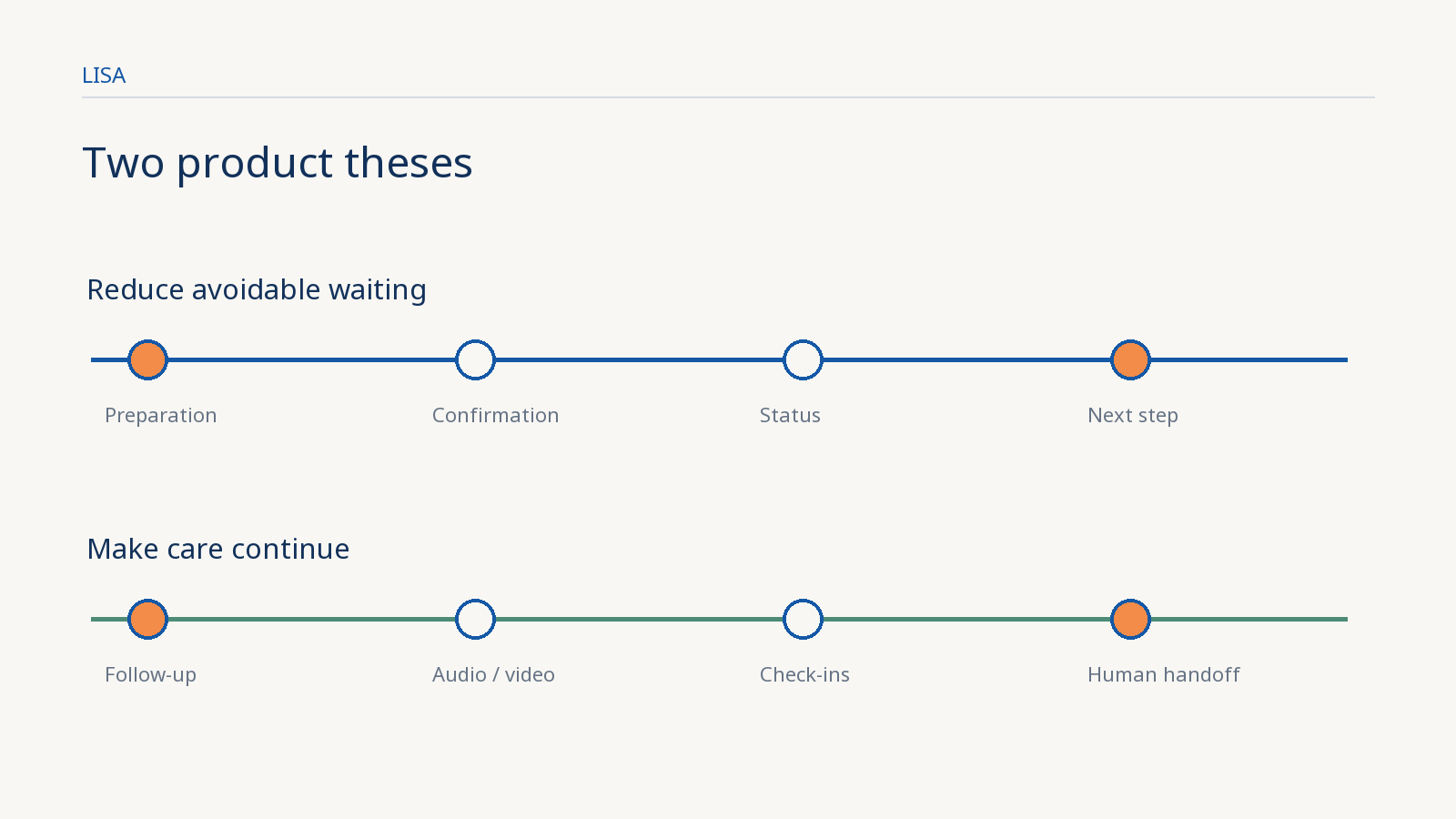
1. Reduce avoidable waiting and make unavoidable waiting understandable
Not every wait in healthcare can or should be eliminated. LISA's first goal is to address avoidable waiting: no-shows, arriving unprepared, incomplete documentation, repetitive questions, coordination failures, missing confirmations, and time lost figuring out where to go or what to do.
When waiting is inherent to the care process, the problem changes. Does the patient know what is happening? Do they know where they are in the journey? Do they know what happens next? LISA can maintain journey status, anticipate information, communicate relevant changes and keep the next step visible. In short: reduce avoidable waiting; make unavoidable waiting understandable.
2. Turn post-care into genuine follow-up
The second thesis begins when the encounter ends. A generic “we hope you are well” message is not continuity of care. Genuine follow-up requires context: who the patient is, what happened, which stage they are in, which information has been approved by the healthcare organization, and what next step is expected.
This is where text, audio and video become more than media formats. They become different forms of presence. The same approved content can be presented as concise text, a warmer voice experience, or a more explanatory video, while preserving the same clinical and operational truth.
Three journeys, one orchestration layer
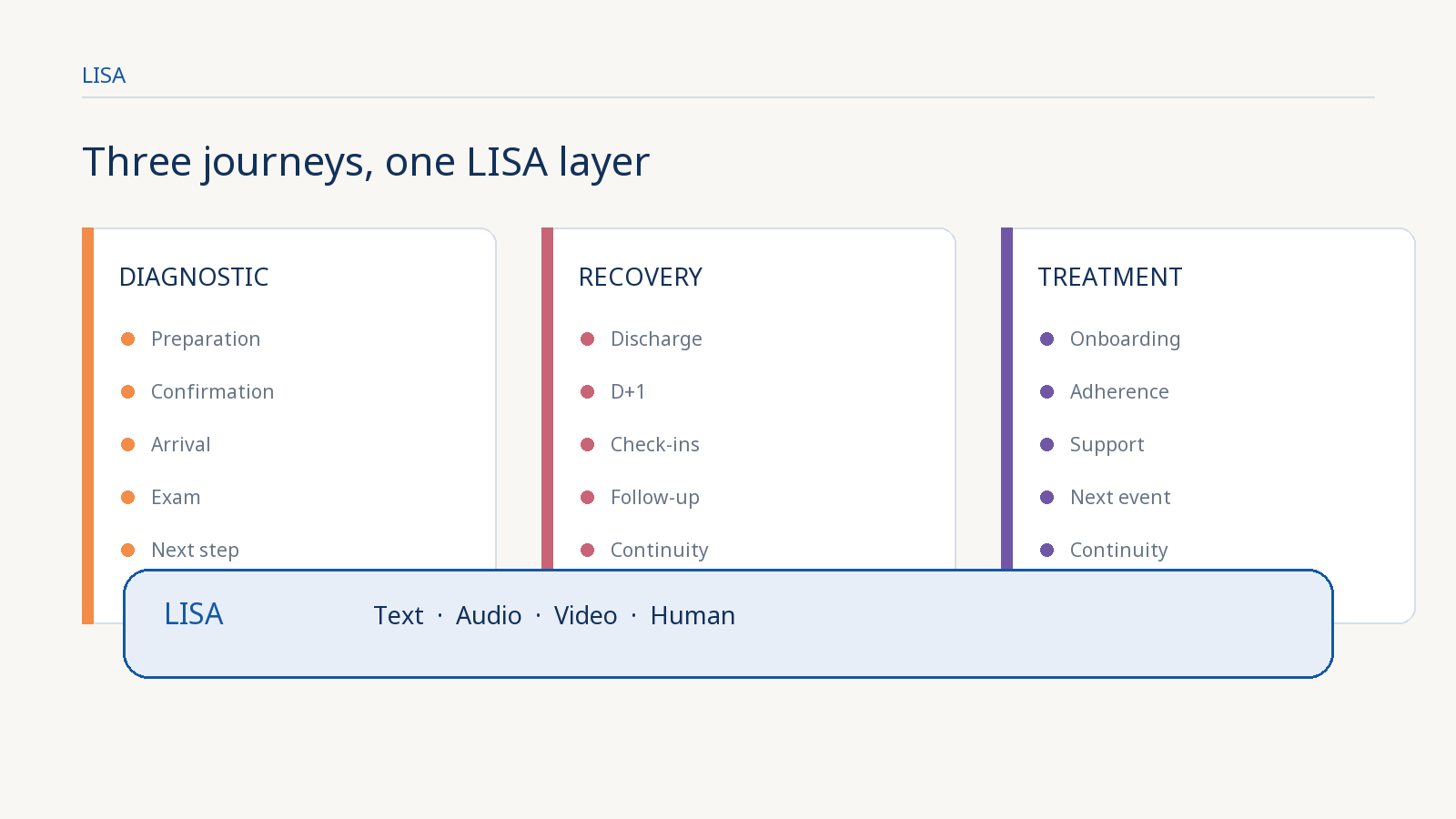
LISA's architecture is initially being developed around three recurring healthcare journeys: Diagnostic, Recovery and Treatment. Each journey can use specialized agents, but all of them share the same operating logic: authorized context, journey stage, institutional rules, approved content, next action and the ability to escalate to a human.
Journey 1: Diagnostic
In the diagnostic journey, the goal is to reduce friction before the exam and prevent patients from arriving unprepared, late or unclear about the process. One agent can confirm date, time and facility. Another can present only preparation guidance previously approved by the organization. Closer to the appointment, another agent can reinforce documents, arrival time and location.
Content can be contextual to the patient, exam, facility, time, language and approved protocol. This allows communication to move from a generic campaign to an operational sequence of next steps.
- confirmation and reminders;
- preparation based only on approved protocols;
- documents, location and arrival time;
- journey-stage status and relevant changes;
- human handoff when a question cannot be answered safely.
The principle is simple: less effort to arrive ready and less time lost trying to understand the process.
Journey 2: Recovery
Discharge closes an important stage for the hospital, but opens another for the patient. This is where LISA can turn static information into an accompanied journey. From authorized data, content can consider first name, facility, discharge date, procedure, professional, recorded medications, post-care instructions and follow-up.
The sequence is intentionally controlled: first, a personalized text is generated and must be approved. Audio is produced from the approved text. Video is produced from the approved audio. There are not three AI systems inventing three different versions of the guidance. There is one approved truth, represented through different media.
In the days that follow, other agents can run check-ins, remind the patient about follow-up, reinforce previously approved instructions and identify responses that require human attention. The goal is not to keep sending messages. It is to make sure the patient never loses the next step.
Journey 3: Treatment
Continuous treatment increases the challenge because the journey may last weeks, months or years. Real life happens between appointments, and that is where forgetfulness, abandonment, uncertainty and operational barriers can emerge.
LISA can support onboarding, institution-defined stages, upcoming events, approved support content and adherence routines when authoritative clinical sources exist. The same multimodal architecture can turn approved guidance into text, audio or video according to the journey moment and communication preference.
One rule matters: if there is not enough approved clinical data, LISA should not creatively fill the gap. The system should enter a Missing approved source data / NEEDS_REVIEW state and route the situation for review. In healthcare, recognizing limits is part of the experience.
Text, audio and video are not three different messages
LISA's multimodal architecture follows an integrity rule. Text is the first representation of the authorized context. Audio uses the exact approved text. Video animates the approved audio. This reduces divergence across channels and allows the healthcare organization to review communication before delivery.
| Format | Role in the journey | Integrity rule |
|---|---|---|
| Text | Objective communication, instructions, confirmations and next steps | Generated only from authorized context and requires approval |
| Audio | Proximity, accessibility and presence | Reads the approved text without creating a new instruction |
| Video | Visual explanation and a stronger sense of accompaniment | Animates approved audio without freedom to rewrite clinical content |
| Human | Judgment, empathy, exceptions and accountability | Always available through escalation when the situation requires a person |
Humanization is not removed by automation
One of the easiest mistakes in applying AI to healthcare is treating automation as the final objective. For LISA, automation is useful when it removes repetition, anticipates the predictable and creates space for professionals to focus on moments where judgment and empathy are actually required.
That is why the Human Queue is part of the architecture, not a hidden exception. When a response signals uncertainty, a rule triggers escalation or the available content is insufficient, LISA can route the case to a person together with the accumulated journey context.
Humanization is not the absence of technology. It is technology knowing when humanity matters more.
One Persona, thousands of individual journeys
A healthcare organization can operate one consistent LISA Persona in identity, voice and tone without turning the experience into mass communication. The Persona can remain the same while context, journey stage, language, facility, procedure, follow-up and approved content vary patient by patient.
The question therefore changes from “what message should we send?” to “what should happen now for this person?” That is the difference between channel automation and journey orchestration.
Technical architecture in development
The layer we are building separates responsibilities explicitly. Clinical and operational systems remain the source of truth. LISA interprets authorized context and coordinates the next action. Specialized engines can generate text, voice and video. Approved content is stored and delivered through a secure patient experience. Human support remains available for escalation.
| Layer | Responsibility |
|---|---|
| Healthcare sources | EHR, scheduling, approved protocols, CRM and other authorized systems provide clinical/operational truth |
| Care Core | Consolidates patient, case, stage, language and journey timeline |
| LISA Agents | Apply rules, recognize context and determine the next permitted action |
| AI Engine Resolver | Selects text, audio, video and messaging engines by organization |
| Content Studio | Generates, reviews, compares, approves and freezes content before sending |
| Secure Care Experience | Delivers text, audio and video through a secure patient link |
| Human Queue | Receives exceptions and situations requiring human action |
How we will know whether it works
LISA is still under development. We therefore do not treat product intent as a proven outcome. Validation must compare operational and experience metrics before and after implementation.
- total and perceived waiting time;
- no-show and rescheduling rates;
- patients arriving prepared for exams/procedures;
- repeated operational support contacts;
- follow-up and return completion;
- content open and consumption rates;
- human escalation rate and reasons;
- Patient Effort, satisfaction and NPS;
- clinical outcomes only when supported by appropriate methodology and care governance.
The Bain + Anahp study informs our design hypothesis: reducing waiting and administrative barriers may reduce detraction, while guidance and post-hospital follow-up may increase the likelihood of promoter experiences.[1] LISA's actual contribution must be demonstrated through real implementations, with appropriate measurement and comparison.
What LISA deliberately should not do
- invent diagnoses, medications, doses, restrictions or clinical guidance;
- replace approved protocols with generated content;
- hide uncertainty to appear more intelligent;
- block access to a human;
- confuse operational automation with clinical decision-making.
Care continues
Healthcare technology has historically learned to record events: appointment completed, exam scheduled, discharge recorded, follow-up booked. The next step is to turn those events into continuity.
That is what we are building with LISA Agents: reduce friction before and during care, maintain clarity when waiting exists, genuinely accompany patients after care, and bring a person closer whenever humanity, judgment or accountability matter more than automation.
No patient should feel alone between one moment of care and the next.
We make care continue.
METHOD
This article uses the 2016 Pesquisa Hospitais Brasil, conducted by Bain & Company with Anahp across 13,984 patients and 18 Brazilian private hospitals, as foundational evidence. These findings are historical and should not be interpreted as a current benchmark. Statements about LISA describe product architecture, mechanisms and impact hypotheses under development, not already-proven clinical or operational outcomes.
SOURCES
- 01Patient satisfaction in Brazilian private hospitals · Bain & Company and Anahp · May 09, 2017
Get healthcare intelligence briefings
New technical analyses as they are published, no noise.
INSIGHTS
Get LISA's next analyses
New readings and each closed edition, sent as they are published.
HEALTH BRAZIL COMMUNITY
Join a curated community of healthcare leaders.
RELATED READINGS
Strategy
We Make Care Continue
LISA was born from a conviction: no patient should feel alone between one moment of care and the next. This is the cultural manifesto of a technology built to make care continue.
Sep 29, 2026 · 3 min read
Strategy
12 Agents, One Patient Journey: How LISA Could Redesign Healthcare Experience in 2027
Twelve specialized agents can connect fragmented healthcare touchpoints into one continuous patient experience, with clinical judgment remaining human.
Sep 26, 2026 · 8 min read